आचार्यान् mAp
Today we will look at the derivation of the द्वितीया-विभक्तिः, बहुवचनम् form of the noun ‘आचार्य’ (भगवद्गीता 1.26)
1. आचार्य (gets the प्रातिपदिक संज्ञा by कृत्तद्धितसमासाश्च। 1.2.46, since it is a कृदन्त form)
2. आचार्य शस् (The सुँप् affixes are ordained by the sutram स्वौजसमौट्छस्टाभ्याम्भिस्ङेभ्याम्भ्यस्ङसिँभ्याम्भ्यस्ङसोसाम्ङ्योस्सुप्। 4.1.2, since आचार्य has a प्रातिपदिक संज्ञा. These 21 प्रत्ययs are grouped into 7 groups of 3 pratyayas and in each group, the three प्रत्ययs gets the संज्ञाs एकवचनम्, द्विवचनम्, बहुवचनम् respectively by the sutram सुपः। 1.4.103. Since our विवक्षा is to derive a द्वितीया विभक्ति बहुवचनम् form, the appropriate प्रत्यय is शस्)
3. आचार्य अस् (शकार is an इत् letter by लशक्वतद्धिते। 1.3.8 and is removed by the sutram तस्य लोपः। 1.3.9 Also, शस् gets the विभक्ति संज्ञा by the sutram विभक्तिश्च। 1.4.104 and this prevents the ending सकार to not get the इत् संज्ञा because of न विभक्तौ तुस्माः। 1.3.4, even though the rule हलन्त्यम्। 1.3.3 would have made it a candidate to get the इत् संज्ञा)
4. आचार्यास् (We have three rules that can come into operation here. First is अकः सवर्णे दीर्घः। 6.1.101 But the rule अतो गुणे। 6.1.97 stops its operation. The operation of अतो गुणे। 6.1.97 is further stopped by the rule प्रथमयोः पूर्वसवर्णः। 6.1.102, which gives the पूर्वसवर्ण दीर्घ as an एकादेश for both the अकारs)
5. आचार्यान् (By the rule तस्माच्छसो नः पुंसि। 6.1.103, the शस् प्रत्यय ordained after a masculine प्रातिपदिक, following a पूर्वसवर्णदीर्घ that was ordained in the previous rule, gets a नकार आदेश. By अलोऽन्त्यस्य। 1.1.52, it replaces the ending सकार)
6. आचार्यान् (By the rule अट्कुप्वाङ्नुम्व्यवायेऽपि। 8.4.2, the नकार gets a णकार आदेश, since it is preceded by रेफ in the same पद and the only letters between them are यकार and आकार, which are both members of the अट् प्रत्याहार. However, since the नकार is पदान्त, this णकार आदेश is stopped by the rule पदान्तस्य। 8.4.37)
Thus we get the final form आचार्यान्.
The operation of this rule can be seen in several masculine forms, not necessarily अदन्तs. For instance, look at the following भगवद्गीता lines (1.26, 1.27)
तत्रापश्यत्स्थितान्पार्थः पितॄनथ पितामहान्।
आचार्यान्मातुलान्भ्रातॄन्पुत्रान्पौत्रान्सखींस्तथा॥
श्वशुरान् सुहृदश्चैव सेनयोरुभयोरपि।
In these lines, all the words पितॄन्, पितामहान्, आचार्यान्, मातुलान्, भ्रातॄन्, पुत्रान्, पौत्रान्, सखीन्, श्वशुरान् have the same kind of form. Here we have examples of अकारान्त and ऋकारान्त प्रातिपदिकs.
Question for the day:
1. What are the kinds of situations when you would expect this नकारादेश (by तस्माच्छसो नः पंसि। 6.1.103) to not happen?
2. What are the conditions necessary for नकार to get a णकारादेश?
Example for यरोऽनुनासिकेऽनुनासिको वा
Today we will look at the application of 8-4-45 यरोऽनुनासिकेऽनुनासिको वा from Bg2-6
न चैतद्विद्मः कतरन्नो गरीयो यद्वा जयेम यदि वा नो जयेयुः ।
यानेव हत्वा न जिजीविषामस्तेऽवस्थिताः प्रमुखे धार्तराष्ट्राः ।।२-६।।
The वृत्तिः for the सूत्रम् 8-4-45 यरोऽनुनासिकेऽनुनासिको वा is from Laghu Siddhanta Kaumudi is यरः पदान्तस्यानुनासिके परेऽनुनासिको वा स्यात्
When a nasal sound follows, then a यर् letter at the end of a पदम् is optionally substituted by a nasal. (Even though the rule is optional, as a convention it is always followed in classical Sanskrit.)
कतरत् + नः । कतरत् gets the पद संज्ञा by 1-4-14 सुप्तिङन्तं पदम्
कतरद् + नः । By 8-2-39 झलां जशोऽन्ते, the letter त् is replaced by द्, which is the closest substitute (1-1-50 स्थानेऽन्तरतमः)
कतरन् + नः । By 8-4-45 यरोऽनुनासिकेऽनुनासिको वा, the letter द् at the end of the पदम् gets replaced by अनुनासिकः optionally, since it is followed by an अनुनासिकः letter. By 1-1-50 स्थानेऽन्तरतमः, the closest substitute has to be chosen. द् and न् share a common place of articulation (दन्ताः) and same internal effort (स्पृष्टम्) So, न् is the closest substitute.
So, we get two final forms कदरद् नः and कतरन्नः
Questions:
1. Perform सन्धिः between the words अकृतबुद्धित्वात् + न (Bg18-16)
2. Why did we have to apply 8-2-39 झलां जशोऽन्ते even though applying 8-4-45 यरोऽनुनासिकेऽनुनासिको वा directly on the initial letter त् would have given the same result?
3. Under 8-4-45 यरोऽनुनासिकेऽनुनासिको वा, the Siddhanta Kaumudi says स्थानप्रयत्नाभ्यामन्तरतमे स्पर्शे चरितार्थो विधिरयं रेफे न प्रवर्तते । चतुर्मुखः Please explain
4. Further under 8-4-45 यरोऽनुनासिकेऽनुनासिको वा, the Siddhanta Kaumudi says कथं तर्हि “महोदग्राः ककुद्मन्तः” इति? यवादिगणे दकारनिपातनात् Please explain
Example for 8-4-40 स्तोः श्चुना श्चुः
Today we will look at the application of 8-4-40 स्तोः श्चुना श्चुः।
The वृत्तिः from Laghu Siddhanta Kaumudi is सकारतवर्गयोः शकारचवर्गाभ्यां योगे शकारचवर्गौ स्तः
When the letter ‘स्’ or a letter of the त-वर्ग: (‘त्’, ‘थ्’, ‘द्’, ‘ध्’, ‘न्’) comes in contact with either the letter ‘श्’ or a letter of the च-वर्ग: (‘च्’, ‘छ्’, ‘ज्’, ‘झ्’, ‘ञ्’), then it is replaced respectively by ‘श्’, च-वर्ग: (‘च्’, ‘छ्’, ‘ज्’, ‘झ्’, ‘ञ्’)।
Example 1 Bg1-36
निहत्य धार्तराष्ट्रान्नः का प्रीतिः स्याज्जनार्दन ।
पापमेवाश्रयेदस्मान्हत्वैतानाततायिनः ।।
स्यात् + जनार्दन ।
= स्याद् + जनार्दन । By 8-2-39 झलां जशोऽन्ते ।
= स्याज् + जनार्दन । 8-4-40 स्तोः श्चुना श्चुः
= स्याज्जनार्दन
Example 2 Bg9-19
तपाम्यहमहं वर्षं निगृह्णाम्युत्सृजामि च ।
अमृतं चैव मृत्युश्च सदसच्चाहमर्जुन ।।
असत् + च ।
= असद् + च । By 8-2-39 झलां जशोऽन्ते ।
= असज् + च । 8-4-40 स्तोः श्चुना श्चुः ।
= असच्च । By 8-4-55 खरि च ।
Questions:
1. Is 8-4-40 स्तोः श्चुना श्चुः applied anywhere in the following verse Bg5-1?
संन्यासं कर्मणां कृष्ण पुनर्योगं च शंससि ।
यच्छ्रेय ऐतयोरेकं तन्मे ब्रूहि सुनिश्चितम् ।।
2. As per the rules of grammar, is the application of the सूत्रम् 8-4-40 स्तोः श्चुना श्चुः valid in the examples below? Why or why not?
समश्ञुते ।
अनुप्रश्ञाः।
These are taken from the Taittiriya Upanishad passage below. (pdf for clarity).
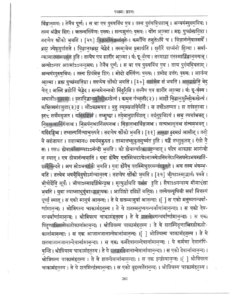
Example for एङः पदान्तादति
Today we will look at the application of 6-1-109 एङः पदान्तादति The वृत्तिः from Laghu Siddhanta Kaumudi is
पदान्तादेङोऽति परे पूर्वरूपमेकादेशः स्यात्
When there is a एङ् letter (‘ए’, ‘ओ’) at the end of a पदम् followed by a अकारः, then in place of these two, there is a single substitute of the prior (एङ्) letter. (This coalescence of the अकारः is indicated by the symbol ‘ऽ’ called अवग्रहः।)
Example 1 Bg2-20
न जायते म्रियते वा कदाचिन् नायं भूत्वा भविता वा न भूयः ।
अजो नित्यः शाश्वतोऽयं पुराणो न हन्यते हन्यमाने शरीरे ।।
शाश्वतस् + अयम् ।
शाश्वतरुँ + अयम् । 8-2-66 ससजुषो रुँ Note that शाश्वतस् gets पद-संज्ञा by 1-4-14 सुप्तिङन्तं पदम्
शाश्वतउ + अयम् । 6-1-113 अतो रोरप्लुतादप्लुते
शाश्वतो + अयम् । 6-1-87 अाद्गुणः
शाश्वतोऽयम् । 6-1-109 एङः पदान्तादति
Example 2 Bg2-20
ऐषा तेऽभिहिता साङ्ख्ये बुद्धिर्योगे त्विमां शृणु ।
बुद्ध्या युक्तो यया पार्थ कर्मबन्धं प्रहास्यसि ।।
ते + अभिहिता ।
तेऽभिहिता । 6-1-109 एङः पदान्तादति
Questions:
1. Is 6-1-109 एङः पदान्तादति an अपवादः to any sutra that we studied before?
2. What is the significance of using the word पदान्ताद् in this sutra? Without that qualification, which form of the हरिशब्दः, covered in class, would we be unable to derive ?
3. Perform सन्धिकार्यम् between the each of the pair of words given below
स्थाने अन्तरतमः
पण्डितः अपि
Sandhi exercise from कृष्णयजुर्वेदः
Today we will look at a mantra from the Krishna Yajur veda (एकाग्निकाणडे द्वितीयप्रश्ने पञ्चमः खण्डः) for analysis.
स्मृतं च मेऽस्मृतं च मे तन्म उभयं व्रतं निन्दा च मेऽनिन्दा च मे तन्म उभयं व्रतं
श्रद्धा च मेऽश्रद्धा च मे तन्म उभयं व्रतं विद्या च मेऽविद्या च मे तन्म उभयं व्रतं
श्रुतं च मेऽश्रुतं च मे तन्म उभयं व्रतं सत्यं च मेऽनृतं च मे तन्म उभयं व्रतं
तपश्च मेऽतपश्च मे तन्म उभयं व्रतं व्रतं च मेऽव्रतं च मे तन्म उभयं व्रतम् ।।
Question:
Identify all the sandhi rules applied here, and show the application of each sutra by picking any two words from the mantra.
Example for नश्छव्यप्रशान्
Today, we will look at the sutra 8-3-7 नश्छव्यप्रशान् applied in Bg1-33 between the words प्राणान् and त्यक्त्वा
येषामर्थे काङ्क्षितं नो राज्यं भोगाः सुखानि च ।
त इमेऽवस्थिता युद्धे प्राणांस्त्यक्त्वा धनानि च ।।१-३३।।
The वृत्तिः from Laghu Siddhanta Kaumudi is
अम्परे छवि नान्तस्य पदस्यरुः न तु प्रशान्शब्दस्य
When the letter ‘न्’ occurs at the end of a पदम् it is substituted by ‘रुँ’ when a letter of the ‘छव्’-प्रत्याहार: follows as long as the letter of the ‘छव्’-प्रत्याहार: is followed by letter of the ‘अम्’-प्रत्याहार:।
प्राणान् + त्यक्त्वा । प्राणान् gets the पद-संज्ञा by 1-4-14 सुप्तिङन्तं पदम्
प्राणारुँ + त्यक्त्वा । 8-3-7 नश्छव्यप्रशान्
प्राणांर् + त्यक्त्वा । 8-3-4 अनुनासिकात् परोऽनुस्वारः This rule applies to the section 8-3-5 to 8-3-12. In this section, if the letter preceding ‘रुँ’ is not nasalized then following that letter (which precedes ‘रुँ’) the अनुस्वार: comes as an augment. Note: As a convention in classical Sanskrit, this rule 8-3-4 (by which the अनुस्वार: comes as an augment) is always preferred to rule 8-3-2 (which would have nasalized the letter preceding ‘रुँ’) Also, by 1-3-2 उपदेशेऽजनुनासिक इत्, the उँ of रुँ gets the इत्-संज्ञा and takes elision by 1-3-9 तस्य लोपः
प्राणां: + त्यक्त्वा । By 8-3-15 खरवसानयोर्विसर्जनीयः he letter ‘र्’ at the end of a पदम् changes to a विसर्ग: when it is either followed by a ‘खर्’ letter or when nothing follows.
प्राणांस् + त्यक्त्वा । By 8-3-34 विसर्जनीयस्य सः, a विसर्ग: gets replaced by the letter ‘स्’ when a ‘खर्’ letter follows.
प्राणांस्त्यक्त्वा
Questions:
1. Try out the very similar but slightly different sandhi between कस्मिन् चित्. Which extra rule comes into application here?
2. Under 8-3-7 नश्छव्यप्रशान्, the Siddhanta Kaumudi says पदस्य किम्? हन्ति । “अम्परे” किम्? सन्त्सरुः । त्सरुः खड्गमुष्टिः । Please explain.
Example for एचोऽयवायावः
Today we will look at the application of 6-1-78 एचोऽयवायावः
The वृत्तिः from Laghu Siddhanta Kaumudi is
एचः क्रमादय् अव् आय् आव् एते स्युरचि
When a अच् letter follows, then in place of the एच् letters (‘ए’, ‘ओ’, ‘ऐ’, ‘औ’) there is a respective substitution (ref: 1-3-10 यथासंख्यमनुदेशः समानाम्) of ‘अय्’, ‘अव्’, ‘आय्’ and ‘आव्’।
Example 1 Bg1-33
येषामर्थे काङ्क्षितं नो राज्यं भोगाः सुखानि च ।
त इमेऽवस्थिता युद्धे प्राणांस्त्यक्त्वा धनानि च ।।
ते + इमे ।
तय् + इति । 6-1-78 एचोऽयवायावः
त इति । 8-3-19 लोपः शाकल्यस्य
Example 2 Bg3-28
तत्त्ववित्तु महाबाहो गुणकर्मविभागयोः ।
गुणा गुणेषु वर्तन्त इति मत्वा न सज्जते ।।
वर्तन्ते + इति ।
वर्तन्तय् + इति । 6-1-78 एचोऽयवायावः
वर्तन्त इति । 8-3-19 लोपः शाकल्यस्य 8.3.19
Example 3
Derivation of the एकचनम् of चतुर्थीविभक्तिः of हरिशब्दः
हरि + ङे । 4-1-2 स्वौजसमौट्छष्टाभ्याम्भिस्ङेभ्याम्भ्यस्ङसिभ्याम्भ्यस्ङसोसाम्ङ्योस्सुप्
1-4-7 शेषो घ्यसखि
हरि + ए । 1-3-8 लशक्वतद्धिते, 1-3-9 तस्य लोपः
हरे + ए । 7-3-111 घेर्ङिति
हरय् + ए । 6-1-78 एचोऽयवायावः
हरये
Question:
Identify the application of 6-1-78 एचोऽयवायावः in the following words:
वटवृक्षः
शयनम्
चिक्षाय
नाविकः
Example for लोपः शाकल्यस्य
Today we will look at the application of 8-3-19 लोपः शाकल्यस्य The वृत्तिः from Laghu Siddhanta Kaumudi is
अवर्णपूर्वयोः पदान्तयोः लोपो वा अशि
In the opinion of the teacher शाकल्यः, the letter ‘य्’ or ‘व्’ is elided when it occurs at the end of a पदम् and is preceded by the अवर्णः (‘अ’ or ‘आ’) and is followed by a letter of the अश्-प्रत्याहारः। Note: Since the elision (of the letter ‘य्’ or ‘व्’) is only in the opinion of the teacher शाकल्यः (and not in the opinion of all teachers), it implies that the elision is optional.
Below are two examples where this rule is applied:
Example 1 Bg3-22
नानवाप्तमवाप्तव्यं वर्त एव च कर्मणि
वर्ते is the लट् उत्तमपुरुषः एकवचनम् of dhatu √वृत् (वृतुँ वर्तने १.८६२)
वर्ते + एव
वर् त् अय् + एव । 6-1-78 एचो यवायावः
वर्ते gets पदसंज्ञा by 1-4-14 सुप्तिङन्तं पदम् and so does the form वर्तय् (by परिभाषा एकदेशविकृतम् अनन्यवत्)
Note that the letter following the य् belongs to the अश्-प्रत्याहारः
Since all the conditions to apply 8-3-19 लोपः शाकल्यस्य are now satisfied, the ending य् can be dropped
वर्त एव
Example 2
वने अासीत्
वनय् अासीत् । एचोऽयवायावः
वन आसीत् । 8-3-19 लोपः शाकल्यस्य
Questions:
1. In Example 1 above, after deriving the final form वर्त एव, the conditions seem ripe to apply 6-1-88 वृद्धिरेचि Can we proceed to apply वृद्धिसन्धिः here? If yes, why? If not why?
2. Spot the application of 8-3-19 लोपः शाकल्यस्य, if any, in the following snippets.
तस्मा ऋषये नमः
द्वा इमौ
Example for झयो होऽन्यतरस्याम्
Today we will look at an example of the application of 8-4-62 झयो होऽन्यतरस्याम् in one of the sutras of the अष्टाध्यायी 1-1-10 नाज्झलौ
The वृत्तिः for this sutram from Laghu Siddhanta Kaumudi is:
झयः परस्य हस्य वा पूर्वसवर्णः
When a झय् letter precedes, then in place of the letter ‘ह्’ there is optionally a substitute which is पूर्वसवर्ण: (सवर्ण: with the preceding झय् letter).
1. अच् + हलौ । 1-4-14 सुप्तिङन्तं पदम् अच् gets the पदसंज्ञा, since it ends in the सुँ-प्रत्ययः
2. अज् हलौ । 8-2-39 झलां जशोऽन्ते The झल् letter च् at the end of the पदम् अच् gets the जश् (ज् ब् ग् ड् द्) as आदेशः By 1-1-50 स्थानेऽन्तरतमः, the closest substitute should be chosen. In this case, since the place of articulation of च् is the तालु, we choose ज्, which also has the same place of articulation.
3. अज् झलौ । This is an optional form that we get by the rule 8-4-62 झयो होऽन्यतरस्याम् In this case, the सवर्णाः of ज् are च् छ् ज् झ् ञ्, by the rule 1-1-9 तुल्यास्यप्रयत्नं सवर्णम् because they all share the same place of articulation तालु and same internal effort स्पृष्टम् Now, again by 8-4-62 झयो होऽन्यतरस्याम्, the closest substitute has to be chosen which is झ्, since both the letters झ् and ह् are voiced consonants and are also aspirated.
Thus we get two final possible forms अज्हलौ and अज्झलौ
Questions:
1. Following the same steps try the sandhi इक् + ह्रस्वादेशे (अष्टाध्यायी 1-1-48 एच इग्घ्रस्वादेशे) Please make sure to check that all conditions are met at each step.
2. Identify the above sandhi and break it in the सूत्रम् 1-2-27 ऊकालोऽज्झ्रस्वदीर्घप्लुतः
Examples of इको यणचि
Today we will look at the application of 6-1-77 इको यणचि briefly and provide a couple of examples to demonstrate its usage. The वृत्तिः for this sutra from Laghu Siddhanta Kaumudi goes as:
इकः स्थाने यण् स्यादचि संहितायां विषये When an अच् letter follows in close proximity (संहितायाम्), then in place of a इक् letter a यण् letter is substituted.
The pratyahara’s इक् and यण् are as follows:
इक् = इ उ ऋ ऌ
यण् = य् व् र् ल्
Here are a couple of examples from Bhagavad Gita that use this sandhi rule:
Example 1 – Excerpt from Bg1-10
पर्याप्तं त्विदमेतेषाम्
तु + इदम्
Here उ is an इक् letter and the अच् इ follows, therefore उ gets replaced व्
त् व् इदम् = त्विदम्
Example 2 – Excerpt from Bg6-2
न ह्यसन्न्यस्तसङ्कल्पः
हि + असन्न्यस्तसङ्कल्पः
The इ is an इक् and the अच् अ follows, therefore इ gets replaced य्,
ह् य् असन्न्यस्तसङ्कल्पः = ह्यसन्नस्तसङ्कल्पः
Questions:
1. Where, if any, is the sutram 6-1-77 इकोयणचि applied in the following snippets:
ब्रवीमि भो इत्यृचः
तद् दूरे तद्वन्तिके
घस्लादेशः
2. Why doesn’t the वृत्तिः for 6-1-77 इको यणचि provide a one-to-one mapping between the स्थानी (letter to be replaced) and the अादेशः (the replacement)? For e.g it should’ve said “replace इ with य् , उ with व्” etc. The वृत्तिः for another sutra 6-1-78 एचोऽयवायावः explicitly states how each स्थानी should be replaced with the corresponding अादेशः by using the परिभाषासूत्रम् 1-3-10 यथासंख्यमनुदेशः समानाम् But nothing of that sort is mentioned in 6-1-77 इको यणचि What could be the reason behind this?
3. Is there a scenario when this rule cannot be applied? If so, can you quote the Pannini sutra and a few examples?
Recent Comments